

Breasts Size B: What It Means, How It Looks & How to Measure
If you’re searching for information about breasts size B, you may be wondering what a B cup actually means, how it is measured, or what it is supposed to look like. The answer is not as simple as a single cup letter. Bra sizing depends on both the band and cup measurements, while breast shape and body proportions can change how the same size looks from one person to another.
In this guide, you’ll learn what a B cup means, how to measure your bra size, why B cups can look different, how B compares with A and C cups, and how to recognize a comfortable fit.

What Does Breasts Size B Mean?
A B cup is a cup size used in bra sizing. It generally represents a particular difference between the measurement around the fullest part of the bust and the measurement around the rib cage.
However, B is not a complete bra size by itself.
A typical bra size contains two parts:
- Band size: the measurement around your rib cage, directly below your breasts.
- Cup size: the letter that represents the difference between the bust and band measurements.
For example, 32B and 36B both contain a B cup, but they are not the same overall bra size. The band measurement changes the dimensions of the bra and affects the resulting cup volume.
This is why saying “I wear a B cup” does not tell you everything about how a bra will fit.

Is Breasts Size B Considered Small?
There is no universal rule that says a B cup is either small, medium, or large.
Cup letters describe the relationship between the bust and band measurements rather than providing an absolute measurement of breast size. A B cup on a smaller band can have a different volume from a B cup on a larger band.
Your body shape also matters. Two people wearing the same bra size can have noticeably different appearances because their breast shape, chest width, height, and overall proportions may differ.
So rather than judging a B cup by appearance alone, it is more useful to think about measurements and fit.
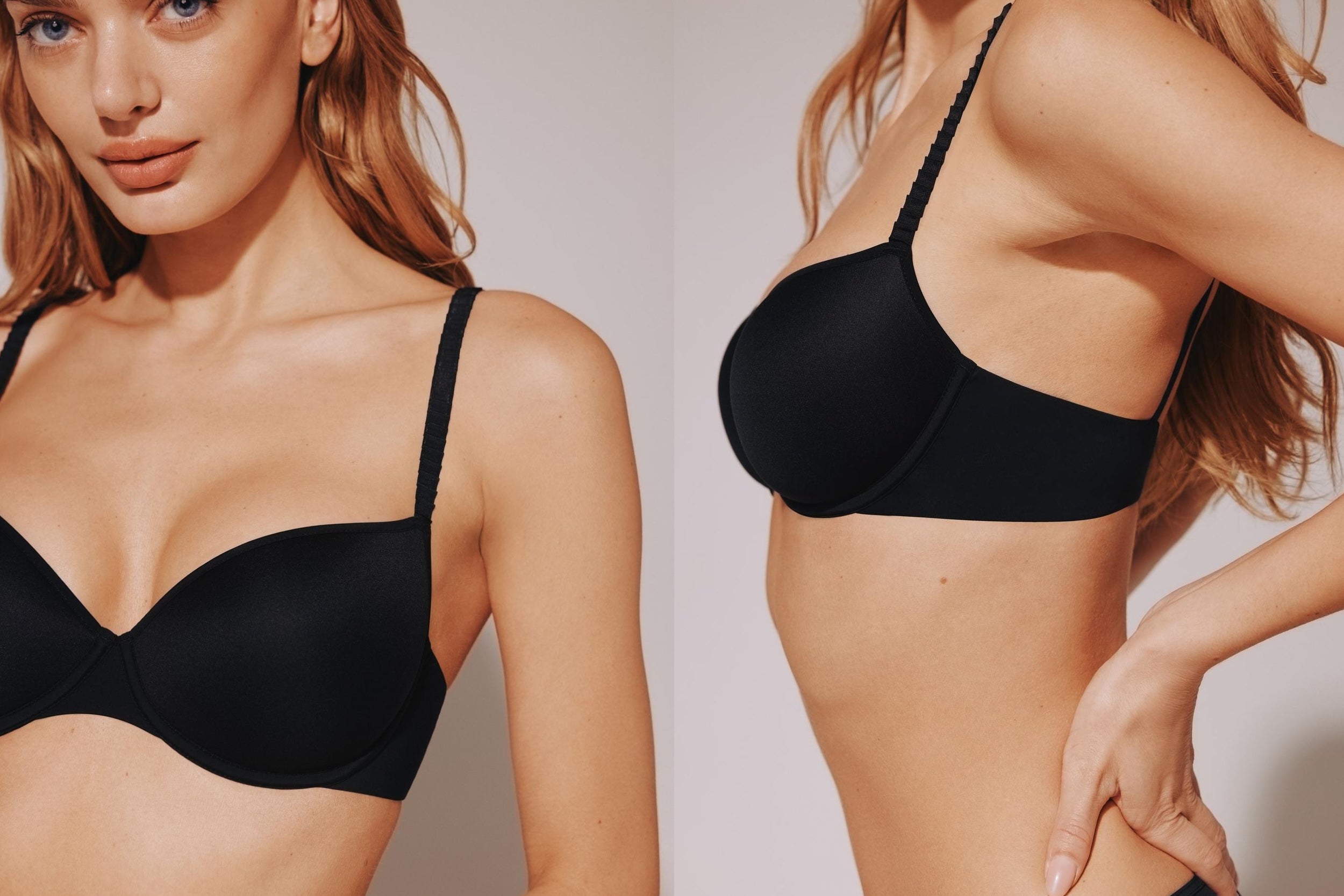
Why Breasts Size B Can Look Different
One of the biggest misconceptions about breasts size B is that everyone wearing a B cup should have a similar appearance.
In reality, breast shape varies naturally.
Some people have more fullness at the bottom of the breast, while others have more fullness toward the upper portion. Some breasts are wider and shallower, while others project farther from the chest.
Other factors that can influence appearance include:
- Breast shape
- Breast projection
- Breast width
- Tissue distribution
- Rib cage size
- Overall body proportions
- Weight changes
- Age
- Hormonal changes
- Pregnancy and breastfeeding history
Because of these differences, it is not possible to determine someone’s exact bra size simply by looking at their breasts.

Breasts Size B and Band Size
The relationship between band and cup size is especially important when comparing bras.
Consider these examples:
30B, 32B, 34B, and 36B are all B cup sizes, but they are different complete bra sizes.
The cup does not exist independently from the band. When the band changes, the proportions and volume associated with the cup can change too.
This is also why sister sizes can be useful when a bra feels close to fitting but one part is not quite right.
For example, a person may find that the band of their usual size feels too loose while the cup volume seems appropriate. A sister-size adjustment can sometimes help, although the exact result depends on the brand and bra design.

Breasts Size B Bra Fit: What to Look For
A well-fitting bra should feel secure without causing unnecessary discomfort.
Look at several areas rather than focusing only on the cup.
The Band
The band should sit relatively level around your body.
If it continually rides up your back, it may be too loose or may not be providing enough support.
The Cups
The breast tissue should sit comfortably inside the cups.
Watch for:
- Spillage over the top
- Tissue escaping at the sides
- Significant empty space
- Wrinkled or folded cup fabric
However, a small amount of space does not automatically mean the cup is too large. Sometimes the cup shape simply does not match your breast shape.
The Straps
Straps should remain comfortably positioned on your shoulders.
They should not constantly fall down or dig deeply into your skin.
Keep in mind that tightening the straps excessively is not a substitute for finding the correct band fit.
The Underwire
If the bra has an underwire, it should generally surround the breast tissue rather than sit directly on it.
Persistent pinching or poking may indicate that the wire shape, cup size, or bra construction is not suitable for you.

B Cup vs A Cup: What’s the Difference?
A B cup generally represents one cup step above an A cup when comparing the same band size and sizing system.
But this comparison becomes less straightforward when the band changes.
For example, comparing an A cup on one band size with a B cup on another does not provide a reliable indication of overall breast volume.
The most useful comparison is always between complete bra sizes, not just individual letters.

B Cup vs C Cup: Is C Much Bigger?
A C cup generally has a larger cup volume than a B cup when the band size remains the same.
For example, within the same sizing system, comparing 34B with 34C provides a more meaningful comparison than comparing “B” and “C” in isolation.
But once the band size changes, cup-volume comparisons become more complicated.
This is why online discussions about whether one cup letter is “big” or “small” can sometimes be misleading.

Why Your Bra Size Can Change
Your bra size can change throughout your life.
This can happen because of:
- Weight fluctuations
- Hormonal changes
- Pregnancy
- Breastfeeding
- Menopause
- Aging
- Changes in body composition
If your bras suddenly feel tight, loose, uncomfortable, or poorly shaped, it may be worth taking your measurements again.
You don’t have to keep wearing the same size simply because it was correct in the past.

Common Problems With B Cup Bra Fit
Even if you believe you have breasts size B, your current bra may not be the right fit.
Cup Spillage
If breast tissue spills over the top or sides, the cups may be too small. However, an incompatible cup shape can produce a similar effect.
Cup Gaping
Gaps can occur when the cup is too large, but they can also result from a cup shape that does not match your breast shape.
Band Riding Up
A band that moves upward at the back may be too loose.
The band should provide a stable foundation rather than moving around throughout the day.
Digging Straps
Straps that dig into the shoulders may be too tight or may be carrying more support than they should.
Underwire Discomfort
Painful or irritating underwire can be caused by an unsuitable wire width, cup size, or bra shape.
Changing the style may solve the problem even when your measurements have not changed.

How to Find a Comfortable B Cup Bra
Finding the right bra is not just about getting a particular letter on the label.
Use these practical steps:
- Take fresh measurements.
- Measure your band and bust separately.
- Check the brand’s own size chart.
- Consider your breast shape.
- Try different bra styles.
- Check the band before tightening the straps.
- Look for cup spillage or excessive gaping.
- Move around while trying the bra.
- Choose comfort over a specific size label.
A good fit should allow normal movement without constant slipping, pinching, or readjustment.

Frequently Asked Questions About Breasts Size B
What does breasts size B mean?
Breasts size B generally refers to a B cup in bra sizing. The cup letter represents a relationship between bust and band measurements, so the complete bra size also requires a band measurement.
Does a B cup look the same on everyone?
No. Breast shape, rib-cage size, body proportions, tissue distribution, and the style of bra can all affect how a B cup looks.
Is B cup a small breast size?
A cup letter alone cannot reliably classify breasts as small or large. The band measurement and individual body proportions need to be considered as well.
Is 34B the same as 32B?
No. The band measurements are different, so the overall dimensions of the bras are different. The cup letter should not be considered separately from the band.
Can B cup breasts change over time?
Yes. Breast and body measurements can naturally change due to factors such as weight fluctuations, hormonal changes, pregnancy, breastfeeding, and aging.
How do I know if my B cup bra fits correctly?
Check the band, cups, straps, and underwire if present. The band should feel secure, the cups should contain the breast tissue without obvious spilling or excessive gaping, and the bra should remain comfortable during normal movement.
Should I choose a bra based only on my cup letter?
No. Your complete bra size, breast shape, the bra’s construction, and the manufacturer’s sizing system all matter.
1 thought on “Breasts Size B: What It Means, How It Looks & How to Measure”